ISSN : -
E-ISSN : 2146-3131

Impact Factor
Slider 1
Slider 3
Slider 4
Slider 5
Slider 6

News See All

Following its historic entry into the Q2 quartile in 2022, Balkan Medical Journal has now achieved Q1 ranking in 2024, making it the first Turkish medical journal to reach this top-tier distinction. With a notable Impact Factor of 3.8, this elevation underscores the journal’s commitment to excellence and its growing global influence in the field of medical research
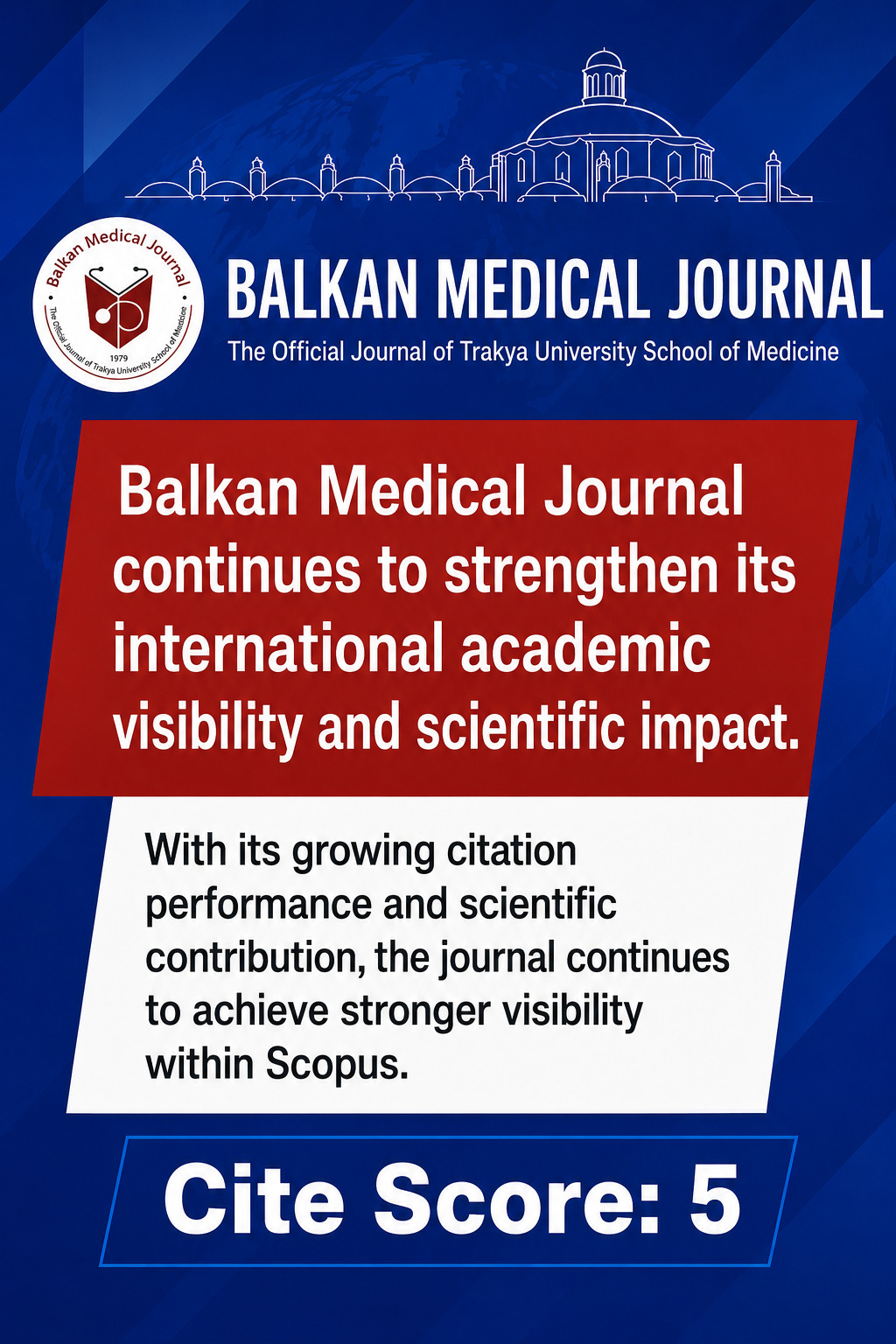
We are pleased to announce that, according to the 2024 Scopus data, Balkan Medical Journal has achieved a CiteScore of 3.7. This reflects the journal’s continued commitment to publishing high-quality, impactful research in the field of general medicine.  
We are pleased to report that our journal has achieved an Impact Factor of 1.9 for the year 2023.  
Balkan Medical Journal adopts the WAME recommendations on ChatGPT and Chatbots related to scientific publications http://www.balkanmedicaljournal.org/static.php?id=10  
In the field of computer science, known as artificial intelligence, algorithms imitate reasoning tasks that are typically performed by humans. The techniques that allow machines to learn and get better at tasks such as recognition and prediction, which form the basis of clinical practice, are referred to as machine learning, which is a subfield of artificial intelligence. http://balkanmedicaljournal.org/uploads/pdf/pdf_BMJ_2461.pdf
Type 1 interferonopathy is a novel context reflecting a group of inborn disorders sharing common pathway disturbances. This group of diseases is characterized by autoimmunity and autoinflammation caused by an upregulation of type 1 interferons (IFN)s due to certain genetic mutations. http://balkanmedicaljournal.org/uploads/pdf/pdf_BMJ_2501.pdf

Articles See All

Yunyun Xiao, Jinhe Shi, Yan Dong, et al.
In their Bayesian network meta-analysis of 16 randomized controlled trials including 2,817 participants, Xiao et al. demonstrated that terbutaline and ritodrine were the most effective tocolytic agents for improving external cephalic version success, with terbutaline also increasing vaginal delivery rates, albeit at the expense of higher maternal adverse effects
Handan Kekeç, Tuğba Şişmanlar Eyüboğlu, Ayşe Tana Aslan, et al.
Kekeç et al. reported, based on data from the Türkiye chILD Registry, that immunodeficiency-associated childhood interstitial lung diseases represent a heterogeneous, high-mortality group characterized by earlier onset and ground-glass–dominant patterns in primary immunodeficiency and mosaic perfusion with bronchiolitis obliterans predominance in secondary immunodeficiency.
Guo-Shan Chen, Wen-Hao Xiong, Dan-Zhou Li, et al.
Chen et al. showed that mesenchymal stem cells engineered to overexpress soluble fibrinogen-like protein 2 significantly mitigate renal ischemia–reperfusion injury in mice by modulating neutrophil polarization through CD32b-mediated activation of the TGF-β/Smad2/3 signaling pathway and reducing proinflammatory responses
Görkem Arıca, İsmail Yılmaz, Doğu Küçüksüleymanoğlu, et al.
Arıca et al. reported that in fetuses with fetal growth restriction, decreased umbilical venous perfusion is accompanied by a compensatory increase in main portal vein flow, whereas the type of umbilicoportal anastomosis does not significantly affect main portal vein hemodynamics.
Mirac Ajredini, Arman Erkan, Amishi Desai, et al.
This study by Ajredini et al. synthesizes contemporary evidence on the transabdominal surgical management of ileal pouch failure, with a focus on standardized preoperative evaluation, unified nomenclature, the Remzi classification for reoperative pouch surgery, and the role of multidisciplinary care in specialized high-volume centers.

Image Corner

Right forearm with “fork-like” radial deviation; wrist direct radiography showing Madelung deformity

News from Balkan Medical Journal See All

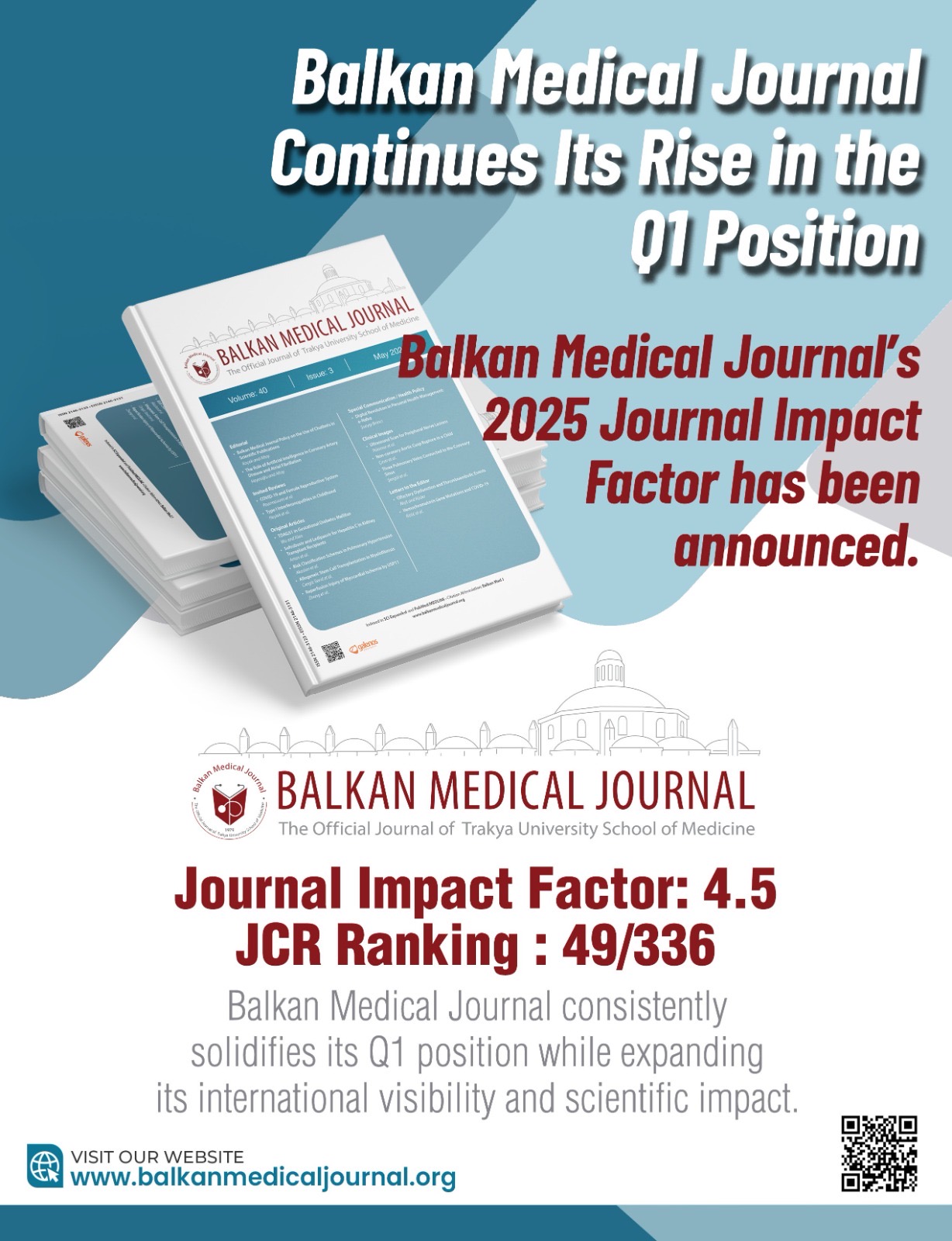
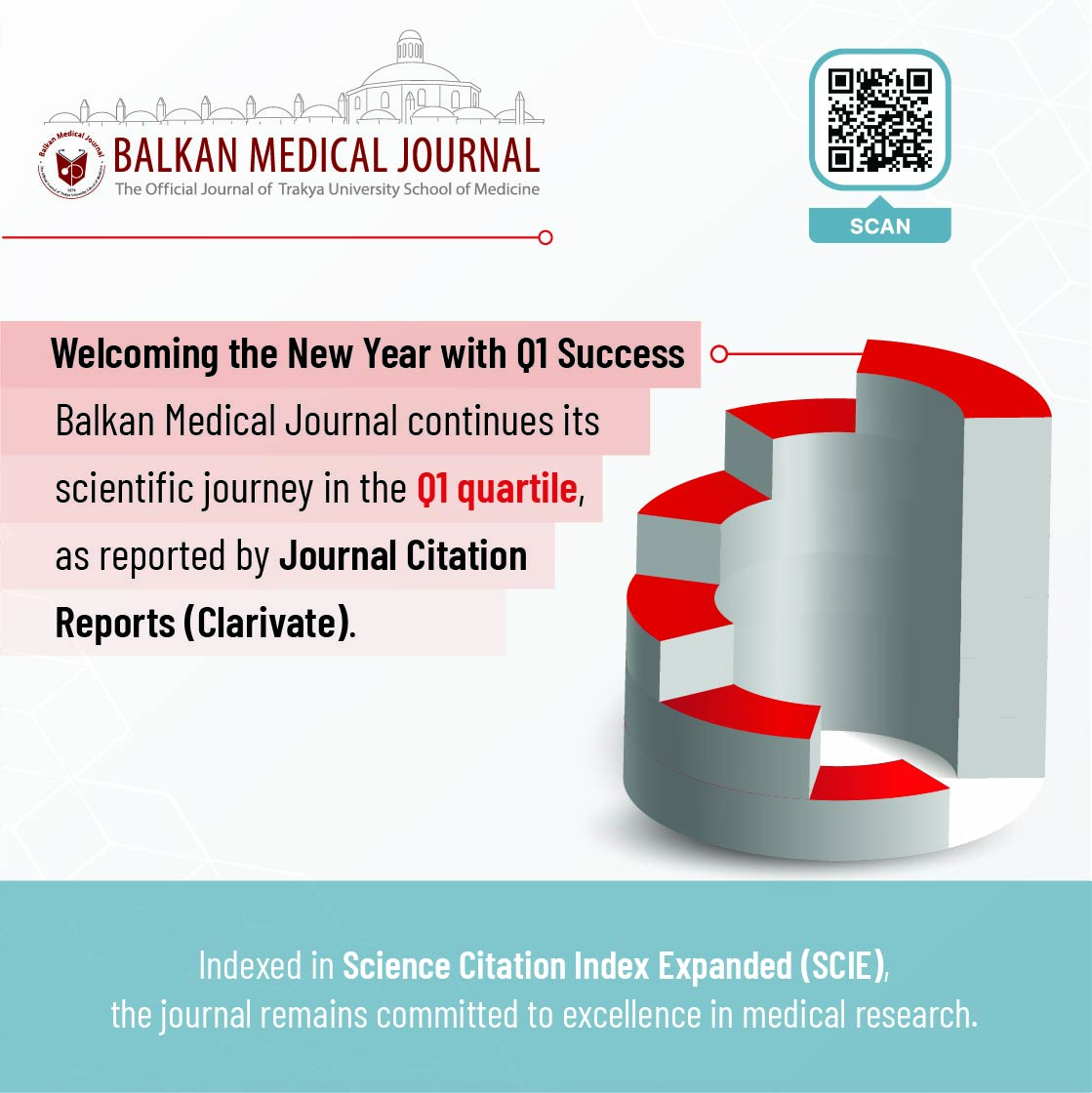
Balkan Medical Journal continues its scientific journey in the Q1 quartile, as reported by Journal Citation Reports (Clarivate). Indexed in Science Citation Index Expanded (SCIE), the journal remains committed to excellence in medical research.
Starting in 2026, the Balkan Medical Journal will adopt a monthly (12 issues/year) and online-only publication model. This update aims to enhance publication efficiency, increase accessibility, and support faster dissemination of scientific content.